
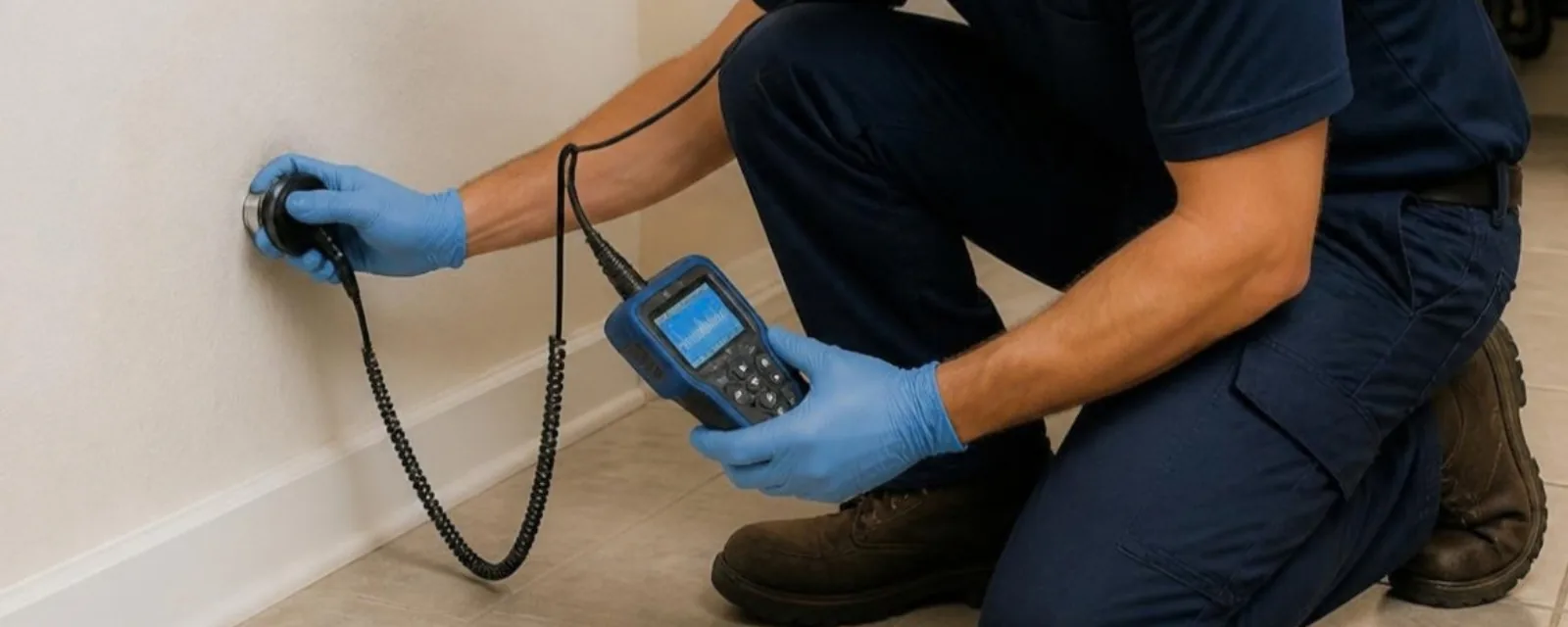
Emergency leak detection in La Puente is the process of finding where water is escaping from a pressurized pipe, a drain or a fixture connection, without tearing out finished surfaces to guess. Most leak calls begin with a symptom rather than a leak: a meter that keeps moving, a bill that climbed, a stain on a ceiling or a patch of floor that feels warm.
This page covers the situations that account for most calls: a meter that runs when everything is off, leaks in walls and ceilings, leaks under the house or slab, buried lines and irrigation. Each one needs a different search, so we start with the symptom and work toward the source.
When a leak is an emergency
A leak is an emergency when water is visibly flowing, when a ceiling is sagging with water, when water is near electrical outlets, or when you cannot stop it. A slow leak that you can contain with a valve may wait for a scheduled visit, though the 24/7 line is open if you prefer to talk to someone now.
Whichever applies, these steps limit damage while a plumber is on the way.
What to do before we arrive
- Shut off the main water valve. It is usually at the front of the property or where the line enters the house. Turn it clockwise until it stops.
- If water is near outlets or a panel, turn off power to that area only if you can reach the breaker without standing in water.
- Place buckets under drips and move belongings. Take photos of damage for your records.
- Open the faucet at the lowest point of the house to drain the system after the main is off. That relieves pressure on the leak.
Meter still running or water bill up
A water meter is the simplest leak detector you own. Turn off every fixture and appliance, then watch the meter. If the small leak indicator keeps turning or the dial moves, water is going somewhere. Take a photo of the reading, wait an hour with no use, and check again.
If the reading changes, the leak is somewhere between the meter and the fixtures. A plumber then isolates sections of the system, closing valves one at a time, until the meter stops.
That tells you whether the leak is in the house, in the yard or under the slab. If the meter stops once the house valve is closed, the leak is inside the home. If it keeps moving, the buried service line is the likely culprit, and water line repair is the next step.
Wet walls, stained ceilings and warm spots
Water travels. A stain on a living room ceiling can come from a bathroom above, but it can also come from a pipe that runs along a joist before dripping at a low point. A soft spot in a wall can sit several feet from the source. That is why a plumber uses moisture meters and thermal imaging to map the damp area before opening anything.
Acoustic listening tools pick up the hiss of pressurized water in a pipe. Pressure testing isolates a suspect line. Once the source is found, a small, targeted opening replaces the guesswork, and drywall repair costs less.
Meter spinning with everything off?
Call and tell the dispatcher what you saw on the meter. We start the search from there.
Leaks under the house or slab
A leak under a slab can show up as a warm patch on the floor, a persistent damp carpet edge, or the sound of running water when everything is off. In a crawlspace, wet soil, mildew smell and rust on pipe hangers are clues. Leaks in these locations usually involve supply lines, drain lines or water heater connections.
If the evidence points to concrete, slab leak repair explains the repair paths, which range from rerouting the line to pipe lining or breaking the slab at the exact point found.
Buried service lines and the yard
The line between the meter and the house runs underground. A leak there may show as a green spot in the lawn, a soft patch in the driveway, wet soil near the meter box or a drop in water pressure. Because the water is under pressure, it can surface far from the break.
Locating the leak with correlators and listening gear reduces the digging to a small area. If the line is old and has failed repeatedly, the conversation turns to replacement instead of another patch.
Irrigation, yard and pool leaks
Sprinkler lines leak at valves, risers and glued fittings, and a valve that sticks open can run for days. Isolating the irrigation system at its shutoff and watching the meter separates yard leaks from house leaks. If your yard has a pool or spa, loss beyond normal evaporation points to plumbing leaks in the equipment pad or in buried lines.
Meter-box leaks, where a fitting at the meter itself drips, are common and cheap to fix once found. Ask the plumber to check the meter connection before assuming the worst.
Leak symptoms and where to look first
Use this to narrow the search before the plumber arrives.
| Symptom | First suspect | Test |
|---|---|---|
| Meter moves with everything off | Service line or house supply | Close the house valve and watch the meter |
| Water bill higher with no change in use | Slow leak, running toilet or irrigation | Dye test in toilet tanks, check irrigation timer |
| Stain on ceiling | Bathroom above, supply or drain line | Moisture mapping, then pressure test |
| Warm spot on floor | Hot line under slab | Acoustic listening and thermal imaging |
| Wet soil near meter | Service line or meter fitting | Listen at the meter, isolate sections |
What affects the cost of leak detection
Leak detection is priced by the search, not by what is found. A short, clear-cut case costs less than a long hunt through a house with several suspect lines.
Insurance note: many policies cover resulting water damage from a sudden leak, and some also pay for the cost of finding it. Gradual leaks are often excluded. Keep your detection report, since your insurer may ask for it.
Want your real number?Call (626) 898-6169 and describe the symptom for a clear price before work starts.
How a leak detection visit works
Call and describe
Tell us what you saw: meter movement, a stain, a warm spot or a bill.
Isolate and test
The plumber closes valves, reads the meter and narrows the search area.
Pinpoint
Listening gear, imaging or a pressure test locates the leak.
Report and options
You get the location, the likely cause and repair options.
Leaks in La Puente homes
La Puente grew from walnut groves and a small airfield into a suburban city that incorporated in 1956, and much of its housing predates modern piping. Homes from that era may have galvanized steel supply lines that corrode from the inside, and copper lines that develop pinhole leaks.
Ask the plumber to identify your pipe material during the visit. If the house has aging galvanized lines, a fix at one leak may only move the pressure to the next weak spot. In that case, repiping is worth pricing out. Commercial properties along Valley Boulevard have their own considerations, covered under commercial plumbing.
Finding a leak is not a permit job, but repairs to the pipe afterward are governed by the California Plumbing Code, based on the Uniform Plumbing Code (UPC). Ask the City of La Puente Building and Safety Division whether the repair you choose needs a permit.
Leak Detection questions from La Puente homeowners
Yes. The emergency line is answered 24/7. A dispatcher arranges a licensed plumber for active leaks, and you hear the price first.
Check the meter with everything off. A moving meter, an unexplained bill increase, a warm floor, a damp wall or the sound of running water are all signs.
Often a small, targeted opening is enough because the leak is located first. Listening gear and thermal imaging reduce guesswork.
Yes. Pool equipment and sprinkler systems are tested by isolation and pressure checks. Tell the dispatcher what you have.
Check toilets for silent leaks, review irrigation schedules and compare usage with the billing period. A plumber can run a dye test and check fixtures.
Yes. See Valinda and West Covina for local pages. Call to confirm your street.
Think you have a leak but are not sure? Call and describe what you see.
☎ Call (626) 898-6169If detection points to a failed line under concrete, read slab leak repair. If a pipe has split and water is flowing now, see burst pipe repair for what to do first.