
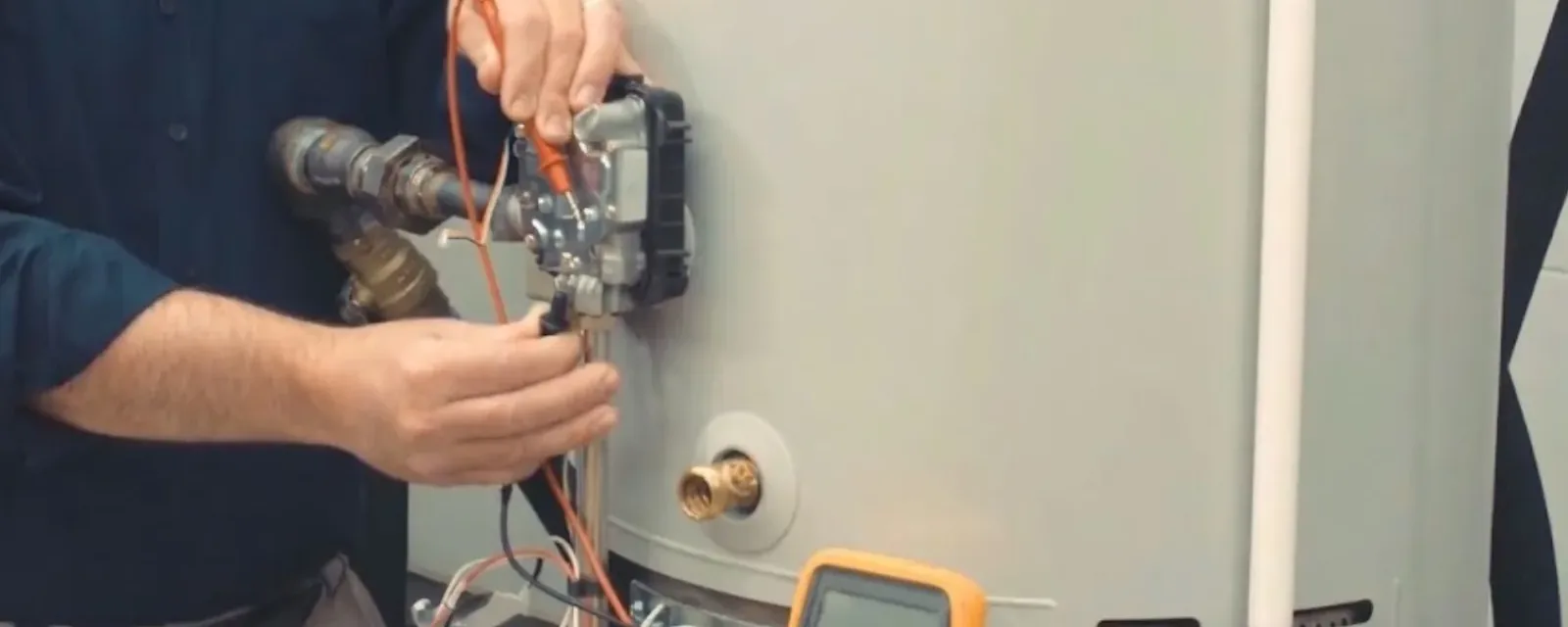
Emergency water heater repair in La Puente starts with working out whether the unit has failed or only one part of it has. A water heater is a tank or a heat exchanger plus a heat source, a thermostat, safety valves and a set of connections, and most no-hot-water calls trace to one of the small parts.
That distinction matters because a heating element, a thermostat or a gas control valve can be replaced for far less than the tank. A leak from the tank body is different. Once water is seeping through the steel shell, there is nothing to patch, and the honest advice is to plan a replacement.
No hot water or a leaking tank: what to do first
A water heater that leaks is the more urgent of the two problems, because the water is damaging your floor or wall while you read this. A heater with no hot water but no leak can wait for a scheduled visit, though an emergency dispatch is available at any hour.
Call the 24/7 line. Before the plumber arrives, take these steps.
What to do before we arrive
- If the tank is leaking, close the cold water supply valve on top of the heater, usually a handle or wheel on the inlet pipe.
- For an electric heater, switch off its breaker. For a gas heater, turn the gas control knob to off. If you smell gas, leave the home and call SoCalGas at 1-800-427-2200 or 911 from outside.
- Place a bucket under a dripping valve and move stored boxes away from the base of the tank.
- Do not drain the tank onto a floor or carpet. Hot water can scald, and a plumber will drain it to a proper outlet.
No hot water: the parts that usually fail
On an electric tank, the upper or lower heating element and the thermostat are the common culprits. If the water runs lukewarm, the lower element or the thermostat that controls it is a good suspect. If there is no heat at all, a tripped high-limit reset or the upper element is more likely. The tripped reset is a one-button check, but a heater that trips again right away has a real fault.
On a gas tank, a pilot that will not stay lit often points to a worn thermocouple or a dirty pilot assembly. A gas control valve that fails is a bigger repair. In both types, sediment on the bottom of the tank insulates the water from the heat source, which cuts output and makes the tank rumble as steam bubbles push up through the layer.
Where the water is coming from matters
A drip at the temperature and pressure relief valve can mean pressure or temperature is too high, and it can also mean the valve itself is worn. Water at the inlet or outlet fittings is often a loose or corroded connection that can be fixed. Water at the bottom of the tank, or beaded along the shell, usually means internal corrosion has gone through the steel.
In a garage or on a slab, water seen near the heater is not always from the heater. A supply line leaking under the slab can surface near it, so a careful plumber traces the water before blaming the tank. If the moisture does not match the heater, bring in leak detection before you spend money on the wrong part.
No hot water this morning?
Call the line and tell the dispatcher whether the tank is gas or electric and whether water is leaking.
Gas, electric and hybrid units repair differently
Gas and electric tank heaters share the same tank, but their repair paths are different. Gas models involve venting, combustion air and a gas valve, so safety checks come first. Electric models involve elements, thermostats and wiring. Hybrid heat pump models add a compressor and a fan, and they use the tank as a backup, so a fault might sit in the heat pump section while the electric elements still work.
If you have a tankless unit, the symptoms change. Error codes, a cold-water sandwich or low flow often point to scale in the heat exchanger or a blocked inlet screen. Those are covered on the tankless water heater page.
Repair or replace: how to decide
A water heater commonly lasts around 8 to 12 years, though sediment, water chemistry and maintenance change that. A tank near the end of that range with a leak or a rusted base is not worth repairing. A tank in good shape with a failed element or thermostat usually is.
The plumber should give you both numbers: the cost to repair and the cost to replace. If a repair costs a large share of a new unit, replacement tends to be the better value because a new tank carries a fresh warranty. When you reach that point, water heater replacement is the next step, and the plumber can usually handle it in the same visit.
Repair or replace: quick comparison
Every house is different. This table shows how plumbers usually weigh the choice.
| Situation | Usually repairable? | What the plumber checks |
|---|---|---|
| No heat, tank dry and sound | Yes | Element, thermostat, high-limit reset or gas control |
| Pilot will not stay lit | Yes | Thermocouple, pilot assembly, draft |
| Drip from the relief valve | Often | Valve, water pressure, thermal expansion |
| Leak at inlet or outlet fittings | Often | Fitting, flex connector, shutoff valve |
| Water seeping through the tank shell | No | Replacement is the honest answer |
| Tank over 10 years with repeated repairs | Rarely worth it | Compare repair cost to a new unit |
What affects the cost of water heater repair
The price of a repair depends on the failed part and the type of heater. Quoting before looking at the unit would be guesswork, so you hear a number after the diagnosis.
Insurance note: a heater that fails from age is not covered by most homeowners policies, but water damage from a sudden tank rupture sometimes is. Photograph the damage and check your policy before cleanup begins.
Want your real number?Call (626) 898-6169 with the make, age and symptoms and we explain what the repair path looks like.
How a water heater repair visit works
Call and describe it
Tell us the fuel type, tank age and whether water is leaking.
Diagnose and quote
The plumber tests the parts, explains the fault and gives repair and replacement figures.
Repair or plan
You approve the repair, or schedule a replacement if the tank has failed.
Test and tidy
Hot water is checked at the tap, safety valves are tested and the area is cleaned.
Water heaters and La Puente water
The La Puente Valley County Water District reported average treated-water hardness of 224 mg/L as calcium carbonate in its 2023 water quality report, with a range from 169 to 344 mg/L, and the district draws mostly on wells in the Main San Gabriel Basin. That is hard water, roughly 13 grains per gallon on average. Not every La Puente address is served by that district, so check your water bill to see who your provider is.
For a water heater on hard water, minerals settle as scale on the tank floor and on heating elements. Scale makes electric elements fail sooner and makes a tank rumble. Flushing the tank on a regular schedule slows that down. If you want to cut scale at the source, see water softener and filtration.
Water heater work falls under the California Plumbing Code, which is based on the Uniform Plumbing Code (UPC), and an electric unit is also wired under the California Electrical Code, which is based on the National Electrical Code (NEC). A plumber who works on heaters regularly knows where the two meet.
Water Heater Repair questions from La Puente homeowners
Yes. The 24/7 line is answered at any hour. A dispatcher schedules a licensed plumber, and you hear the price for the repair before work starts.
Sediment on the tank floor traps water that boils underneath and pushes up through the layer. Flushing the tank often reduces it. If the tank is old, the sediment may be too heavy and replacement may be better value.
Many tank heaters last around 8 to 12 years. Hard water, high temperature settings and skipped flushing shorten that. A leaking tank shell ends the discussion.
Yes, many tankless faults come from scale or blocked screens and can be repaired. See the tankless water heater page for what a flush and descale involves.
Follow the label on the heater. If the pilot will not stay lit, or you smell gas at any point, stop, leave the home and call SoCalGas at 1-800-427-2200 or 911.
California Health and Safety Code section 19211 says new, replacement and existing residential water heaters must be braced, anchored or strapped to resist falling or horizontal movement in an earthquake. Ask the plumber to check yours.
Not sure if it is a repair or a replacement? Call and describe the symptoms.
☎ Call (626) 898-6169If the diagnosis lands on a new unit, a planned swap is covered under water heater installation, and a failed tank in an emergency is covered under water heater replacement. For help nearby, emergency plumbing in Baldwin Park has its own page.